From Saxon Settlement to Industrial Powerhouse
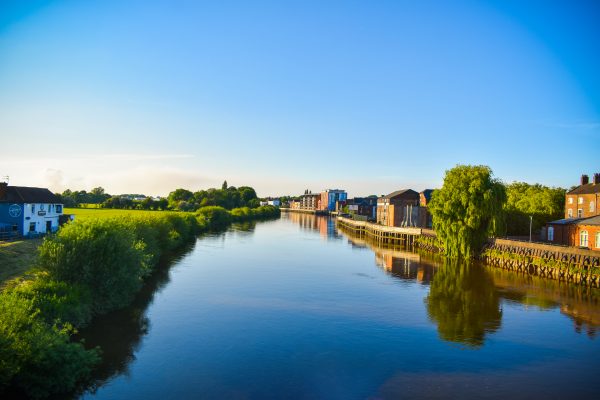
Gainsborough is one of Lincolnshire’s oldest and most historically significant towns. It is believed that the Anglian tribe known as the ‘Gainas’ first settled here in the 6th century, laying the foundations of the present-day town and giving rise to its name. Its location on the River Trent shaped its future, providing access to major trade and transport routes and helping establish the town as an important centre of commerce and communication.
Viking Gainsborough and the Danish Kings
The town achieved national significance during the Viking era. In 1013, Sweyn Forkbeard, King of Denmark, sailed his fleet up the Trent and landed at Gainsborough, securing the submission of much of England. For five weeks, Gainsborough stood as the capital of England and Denmark. Following Sweyn’s death, his son Canute continued to strengthen Danish rule. Gainsborough was later recorded in the Domesday Book of 1086 and developed as a prosperous market town, wool trading centre and inland river port throughout the medieval period.
Medieval Prosperity and Gainsborough Old Hall
The prosperity of medieval Gainsborough is reflected in the historic townscape that survives today. At the heart of the conservation area stands Gainsborough Old Hall, one of the best-preserved medieval manor houses in England. Built in the late fifteenth century by Sir Thomas Burgh, the Hall welcomed royal visitors including Richard III and Henry VIII. The medieval street pattern, historic plots and surviving commercial buildings continue to illustrate the town’s development over many centuries.
Religion, Conflict and the Pilgrim Story
Gainsborough also played an important role in political and religious history. During the English Civil War, the town witnessed a series of military engagements, including one of Oliver Cromwell’s earliest notable victories at nearby Foxby Hill. Earlier in the seventeenth century, Separatist congregations worshipped at Gainsborough Old Hall before fleeing persecution and seeking religious freedom abroad, creating a lasting connection to the Pilgrim story and the Mayflower voyage.
Industrial Growth and Innovation
The eighteenth and nineteenth centuries brought further growth and prosperity. River trade, improved transport links and the arrival of the railway supported industrial expansion. Firms such as Marshall, Sons & Co. gained an international reputation for the manufacture of agricultural machinery and steam engines, while the Rose Brothers became renowned for engineering innovation and packaging machinery. Warehouses, factories, civic buildings and commercial premises transformed the town, while Georgian and Victorian development added further richness to the streetscape.
Gainsborough Today
Today, Gainsborough Conservation Area contains a remarkable collection of historic buildings and spaces reflecting more than a thousand years of history. Medieval streets, Georgian and Victorian architecture, industrial heritage, places of worship and views towards the River Trent combine to create a townscape of special architectural and historic interest, telling the story of a town that has evolved from an early Saxon settlement into a thriving market town, river port and industrial centre.
Come Discover Gainsborough
Find out more about Gainsborough’s history through the town’s self-guided heritage trail. Whether you’re a local resident or visiting from further afield, this circular walk offers an introduction to the town’s rich and varied past. Download the trail here, or pick up a printed copy from Gainsborough Heritage Centre (open Tuesdays and Saturdays), Gainsborough Old Hall (opening tims are seasonal. Please check their opening times) or Gainsborough Library (open Monday to Saturday, 9am to 5pm).
For more information about visiting Gainsborough, including places to visit and things to do, head over to our visit page. For regular updates follow Discover Gainsborough on Facebook and Instagram.